Store + blend
Sludge is equalized and agitated to give the press a consistent feed.
 LINXEQUIPMENTConfigure LINXPRESS
LINX EQUIPMENT FAMILY 09
LINXPRESS
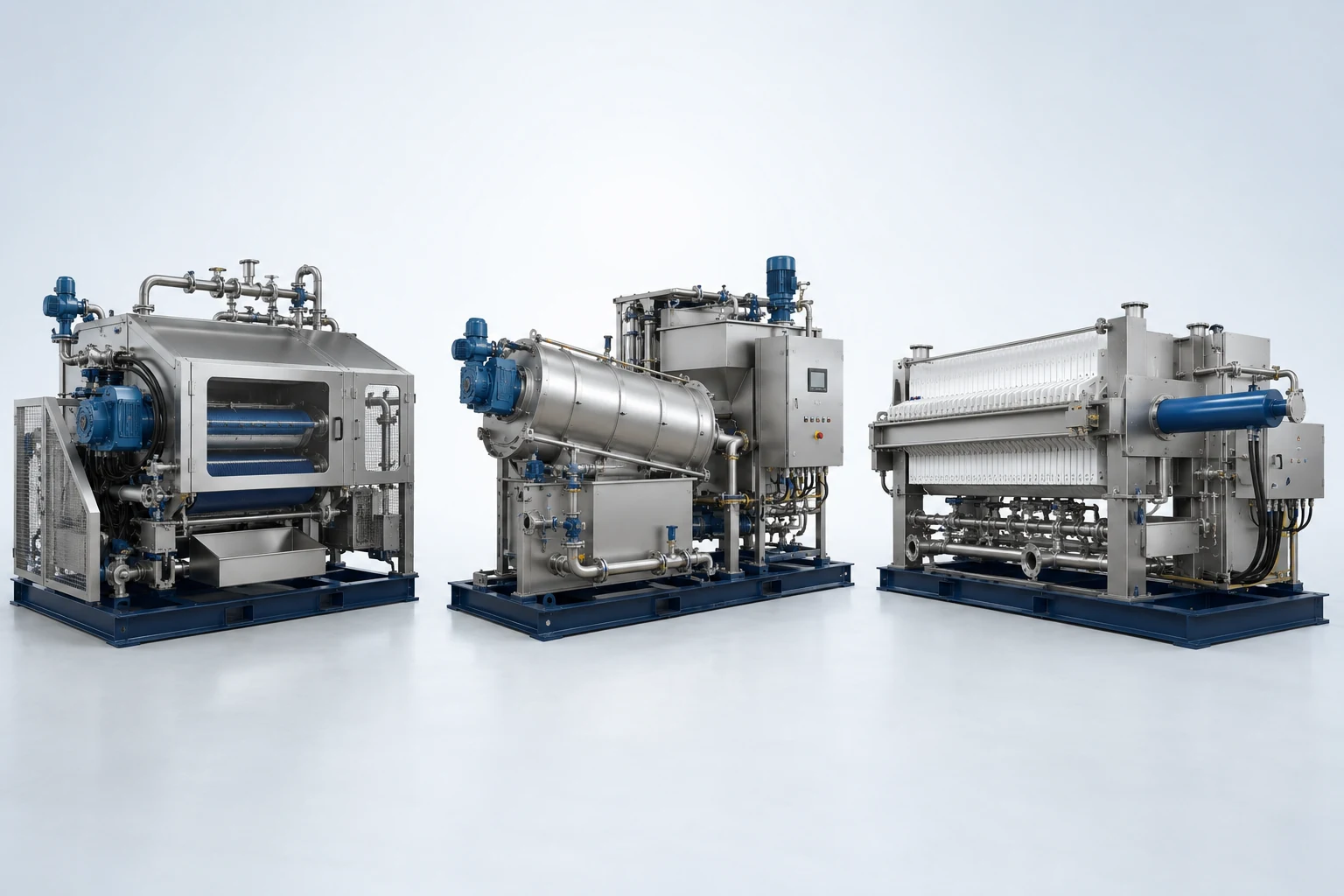
LinxPress reduces sludge volume by separating water from conditioned solids and coordinating the equipment required to store, feed, dewater, and handle the resulting cake.
WHAT IT DOES
LinxPress includes belt presses, screw presses, and recessed-plate filter presses. The correct machine depends on sludge type, solids concentration, oil content, required cake dryness, operating schedule, wash-water availability, labor, and downstream cake handling.
The dewatering machine is only one part of the system. Linx can integrate sludge holding, agitation, polymer preparation, feed pumping, filtrate return, wash-water systems, cake conveyors, hoppers, platforms, guarding, and controls.
HOW IT WORKS
Sludge is equalized and agitated to give the press a consistent feed.
Polymer and controlled mixing develop a structure that releases water effectively.
The selected belt, screw, or plate process separates filtrate from the solids.
Dewatered material moves to a conveyor, hopper, container, or loadout arrangement.
EQUIPMENT CAPABILITIES
AVAILABLE CONFIGURATIONS
Belt press
Application-sizedContinuous dewatering for municipal and industrial sludge with polymer conditioning and wash-water support.Screw press
50–300 GPMCompact, lower-speed continuous option for selected industrial and mixed sludges.Plate press
50–3,000 GPDBatch high-pressure dewatering where clearer filtrate or higher cake solids are priorities.Published ranges identify current Linx platform configurations. Final hydraulic capacity, materials, loading, retention, utility demand, and performance basis are established for the application.
BEST-FIT APPLICATIONS
DESIGN DATA REQUIRED
TREATMENT-TRAIN INTEGRATION
LinxFloat skimmings, LinxSettle underflow, biological sludge, or another residuals source.
→Storage, polymer conditioning, feed control, dewatering, filtrate, and wash systems.
→Cake conveyance, hopper storage, loadout, disposal, and filtrate return to treatment.
CONFIGURE LINXPRESS
Send the available flow and laboratory data, treatment target, site constraints, utilities, schedule, and operating plan. Linx will turn those inputs into a buildable LINXPRESS design basis and integrated equipment concept.